Why an active social media presence could be more important than you think.
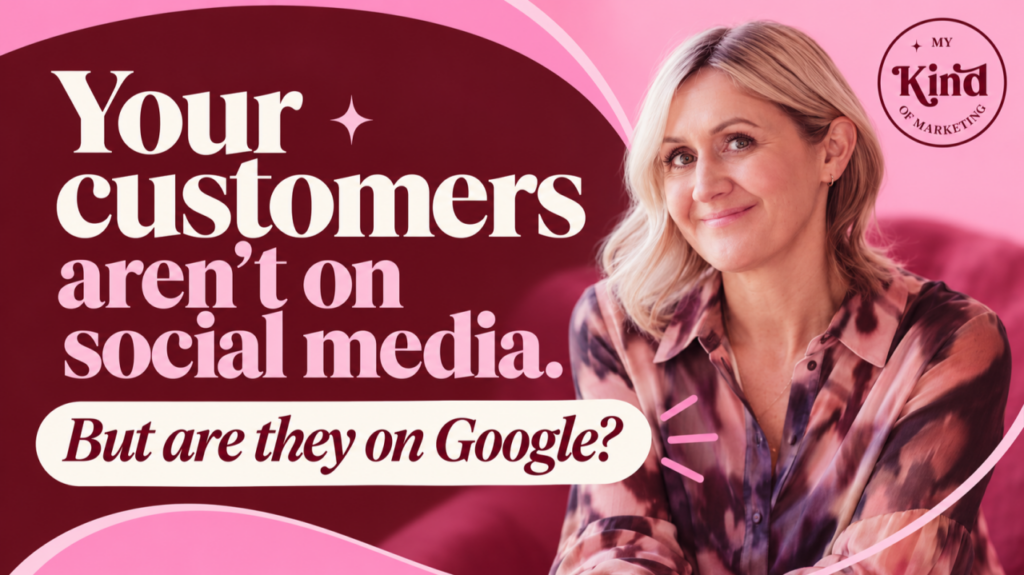
“Our customers aren’t on social media.”
“We get all our business through word of mouth.”
“We haven’t got time.”
“We tried it once. Didn’t work.”
I’ve heard them all.
And look, I understand that running a business is time-consuming. Social media is another thing to think about, another expense and another job on an already ridiculous to-do list.
But here’s something worth considering.
Your customers don’t need to be on social media to discover your social media content.
Confused? Bear with me.
AI has entered the conversation
A recent article in Social Media Today caught my attention.
SE Ranking analysed 100,000 keywords to understand which sources were appearing in AI-generated search results.
And the findings were pretty interesting.
Social media links appeared in:
- 67.66% of Google AI Overviews
- 32.39% of Google AI Mode responses
- 8.4% of ChatGPT answers
Yes, AI search tools are referencing content from social media platforms when answering people’s questions.
Now, before everyone rushes off to schedule 47 LinkedIn posts, there’s something important to understand.
The research doesn’t prove that posting every day makes AI more likely to recommend your business.
And YouTube accounts for a substantial proportion of Google’s social media citations, so we shouldn’t assume every social platform works the same way.
But it does suggest that social media has a role to play in how people find information through AI-powered search.
And that’s rather interesting.
Let me give you an example
I work with care providers, so let’s use a care home.
Imagine someone’s looking for residential care for their mum.
It’s a big decision. They want to get it right.
So they turn to Google and search:
“What should I look for when choosing a care home?”
Google’s AI-generated answer might reference a helpful video from a care provider explaining what families should consider when visiting a home.
Perhaps the video talks about activities, mealtimes, visiting arrangements or how residents are supported.
The family watches it.
They find the information useful.
They notice which care provider created it.
And perhaps they decide to find out a little more.
Now, none of that is guaranteed. It’s an example of how this could work.
But here’s the interesting bit.
That family didn’t need to be following the care home on Facebook, or even have a social media account, to discover its content.
They were using Google.
See where I’m going with this?
So, should businesses be posting more?
Not necessarily.
I spend a lot of my working week managing social media, advising businesses and training people to use it more effectively.
And one thing I regularly come back to is that posting for the sake of posting isn’t much of a strategy.
Three posts a week because someone once told you that’s what you’re supposed to do?
I’d rather know what those posts are trying to achieve.
This research doesn’t change that.
If anything, it’s another reason to think more carefully about what you’re publishing.
What would I recommend?
Start with the questions your customers are asking.
The ones you answer in emails, on the phone, during meetings or when someone enquires about your services.
Those questions are a good starting point for useful content.
Share what you know.
You’ve got experience and expertise that people could benefit from.
Use it.
And please don’t assume everything you publish needs to be a sales pitch.
Think about where your content sits in your wider marketing.
Does your social media reflect what you say on your website? Are your services clear? Is your information up to date?
And are you using the platforms that make sense for your business and audience?
Because this research doesn’t mean every business should suddenly be producing YouTube videos or spending hours on LinkedIn.
Finally, stop judging every post by how many people liked it.
A post gets three likes.
Disappointing? Perhaps.
Proof that it achieved absolutely nothing?
No.
It might have helped someone understand your services, answered a question or prompted someone to visit your website.
And now there’s the possibility that relevant social content could be discovered through AI-powered search too.
That’s not an excuse to ignore your analytics, by the way.
It’s a reason to measure the things that relate to what you’re trying to achieve.
Social media is so much more than social media
I’ve always encouraged businesses to look beyond likes and follower counts.
Social media can help people get to know your business, understand what you offer, see your expertise and decide whether you’re someone they want to work with.
And now we have another consideration.
AI-powered search.
Am I saying every business needs to be on every platform?
No.
Am I saying an active Facebook page will magically make ChatGPT recommend your business?
Also no.
But I am saying that the content you publish on social media could have a life beyond the platform where you originally shared it.
And that’s a pretty good reason to take it seriously.
So the next time someone tells you their customers aren’t on social media, perhaps ask them something else.
Are they on Google?
Because that’s where they might discover your social media content.
Even if they’ve never liked a single one of your posts.
